07
Wing Sweep Aerodynamic Study
A Python Hess–Smith panel method coupled with a boundary layer solver to evaluate how sweep angle changes lift, drag, and boundary layer behavior.
- Numerical Methods
- Aerodynamic Modeling
- Python
Overview
- Hess–Smith panel method implemented in Python
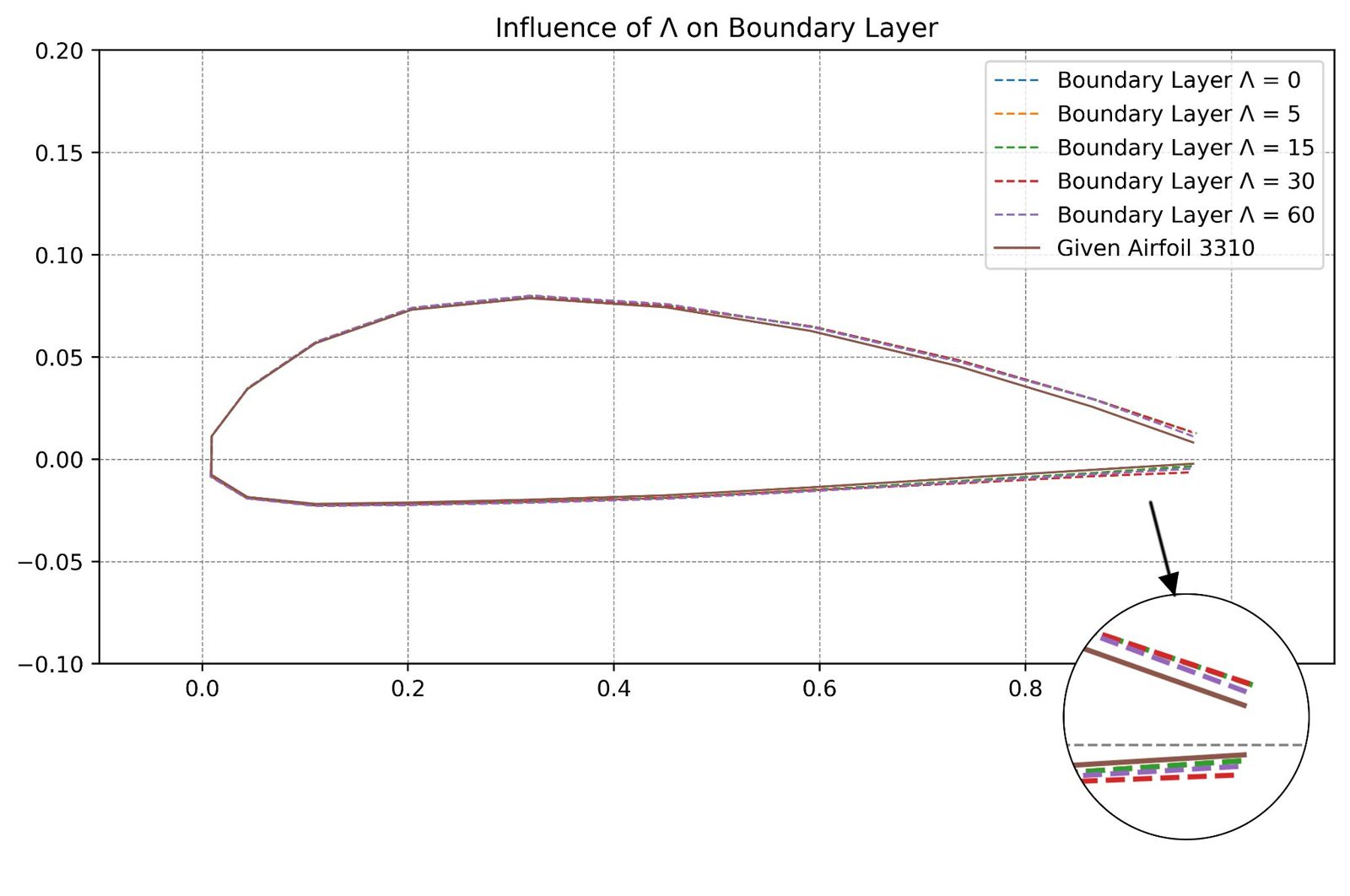
- Integrated boundary layer solver
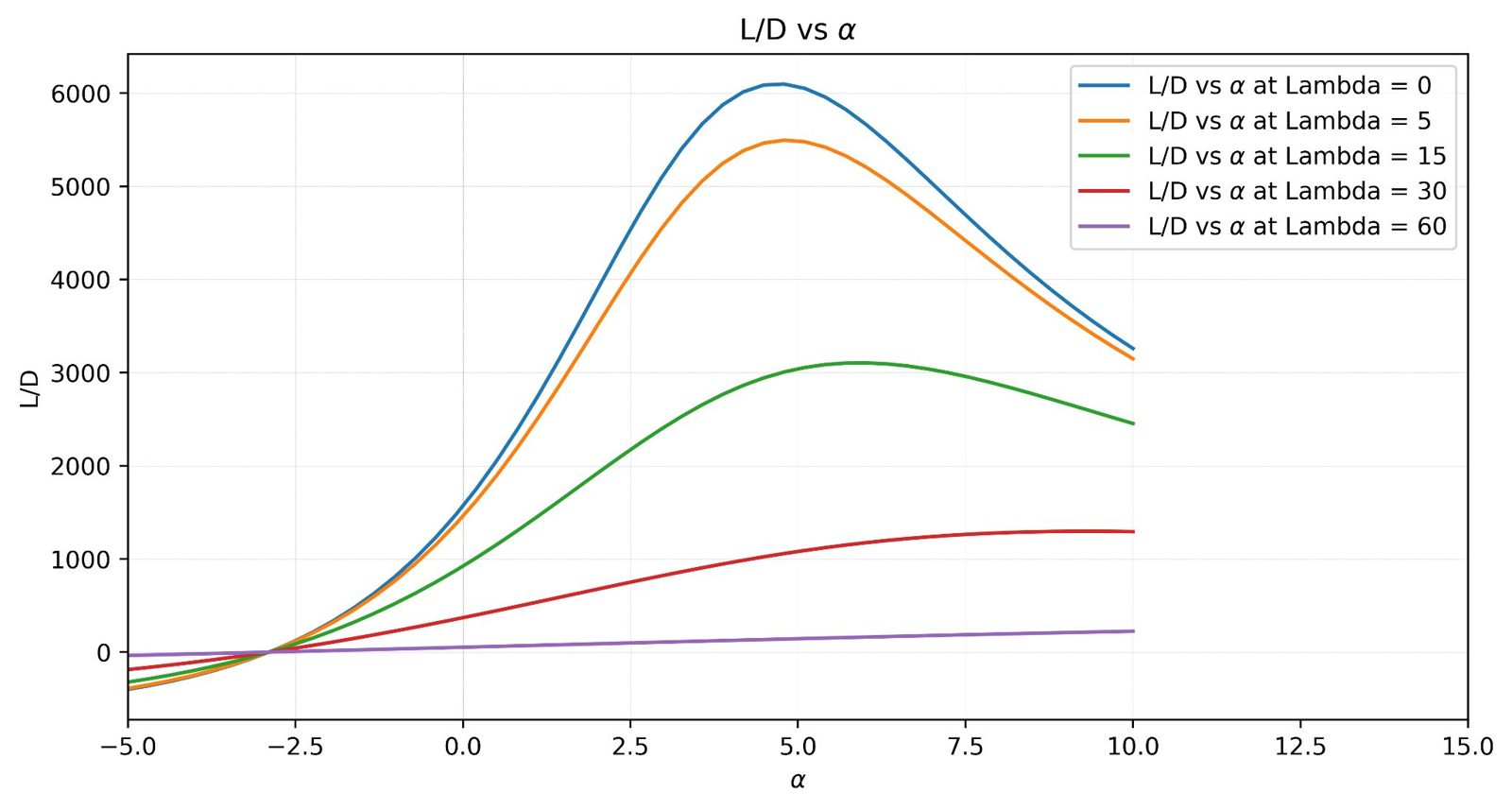
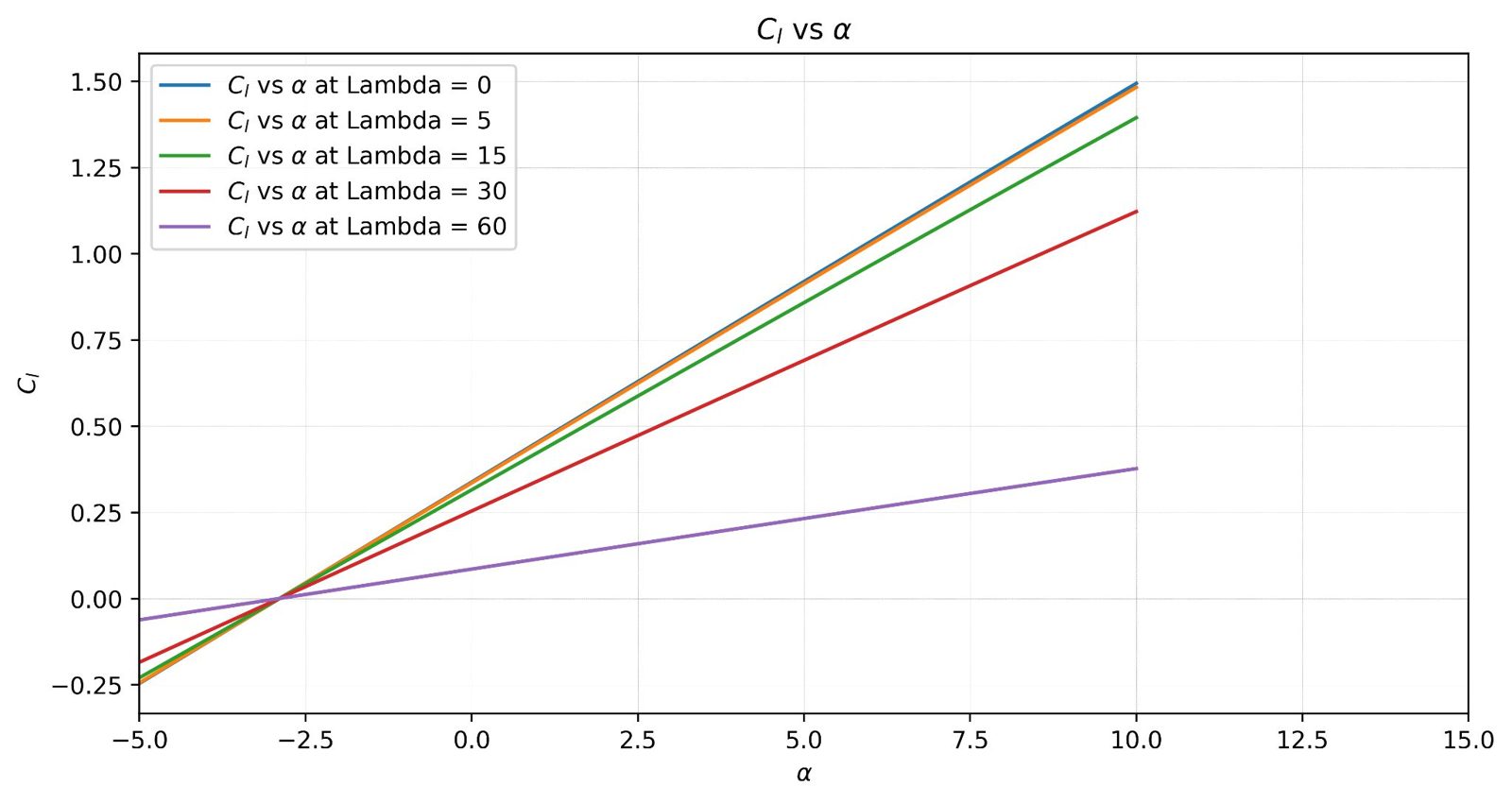
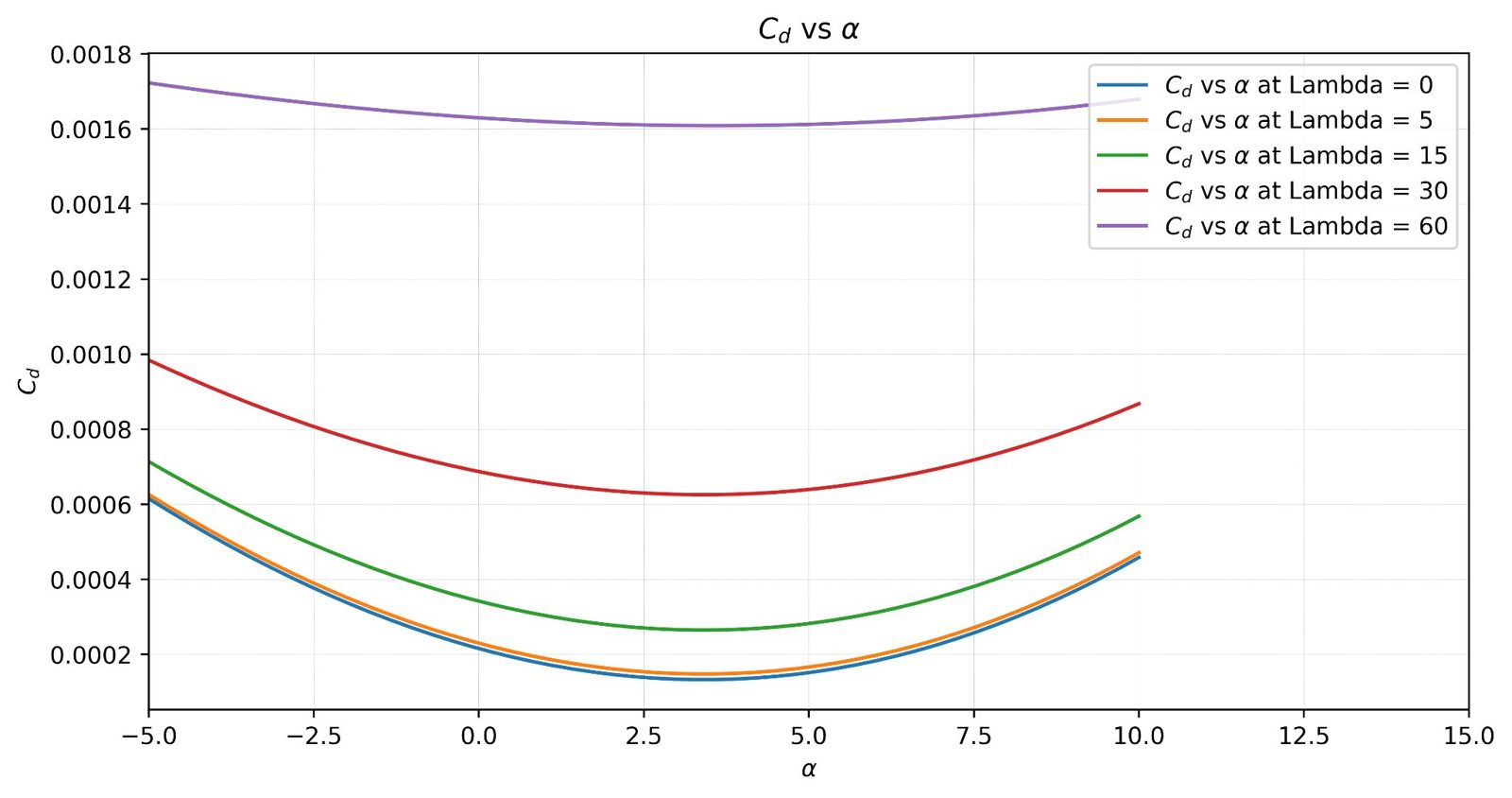
- Cl, Cd, L/D, boundary layer thickness, and transition evaluated
Performance trends
- Increasing sweep reduces lift curve slope and aerodynamic efficiency
- Minimum drag coefficient rises with sweep angle
- Peak L/D occurs at zero sweep
Flow physics
- Higher sweep thickens the boundary layer due to reduced chordwise velocity
- Laminar-to-turbulent transition is delayed at higher sweep
- Fast numerical modeling supports conceptual wing design