01
Mobile Robotic System for Precision Object Retrieval
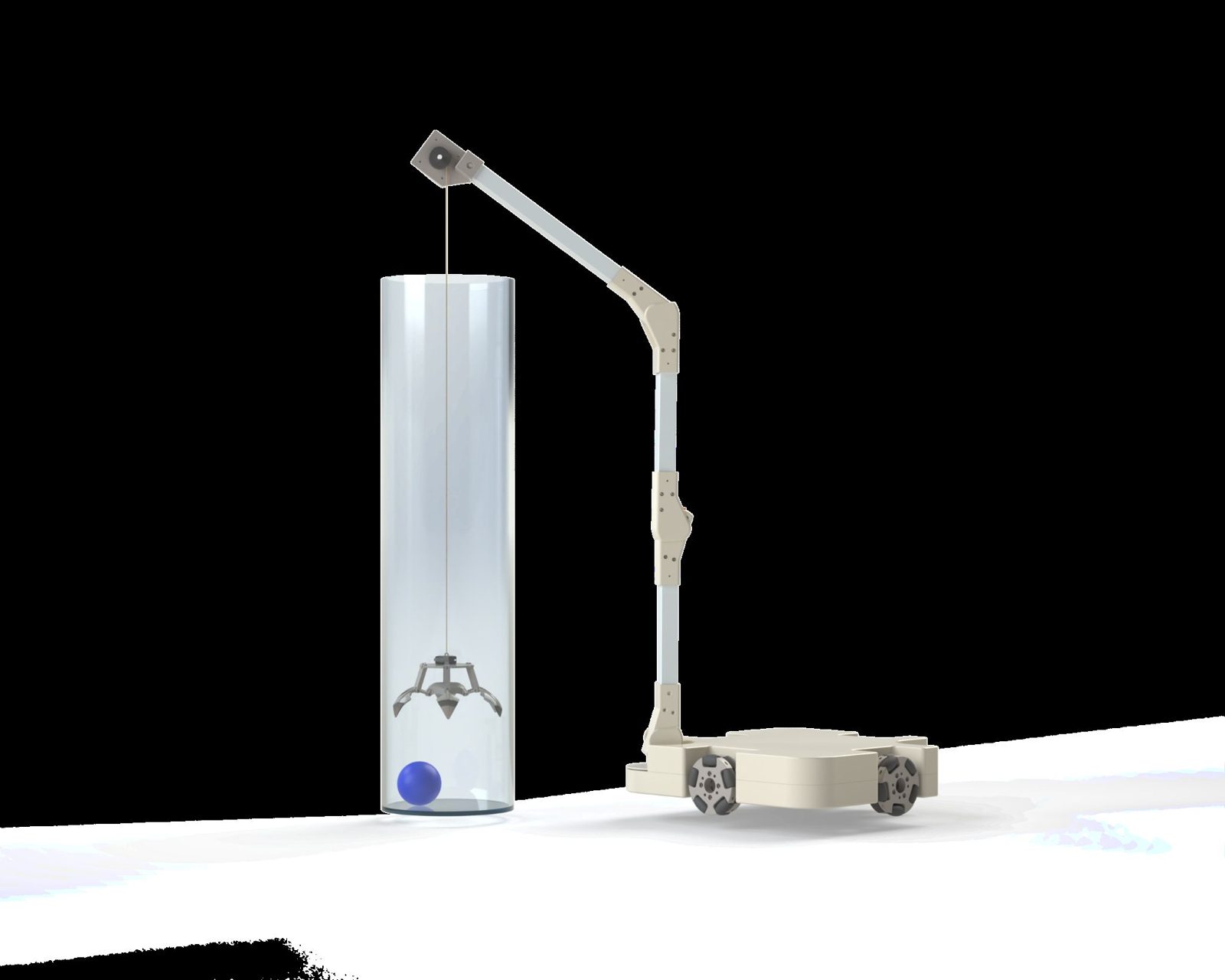
A remotely operated mobile robot with a 6-DOF arm that retrieves a ping-pong ball from a 600 mm beaker and drops it into a smaller one, inside a 300 × 300 × 150 mm footprint.
- Kinematics
- DFMA
- System Integration
- Footprint (mm)
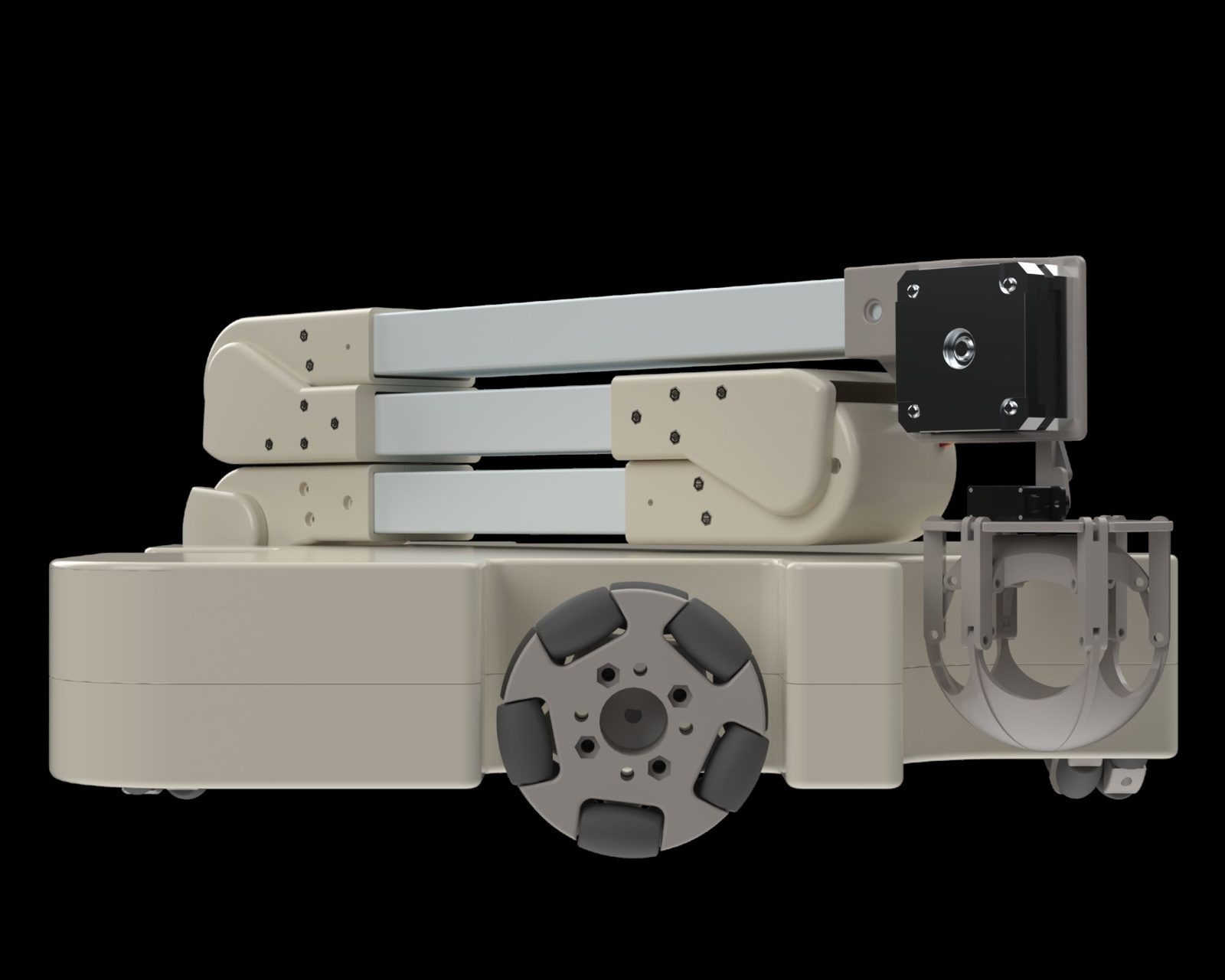
- 300 × 300 × 150
- Vertical reach
- 750 mm
- Mass
- ~3.66 kg
Overview
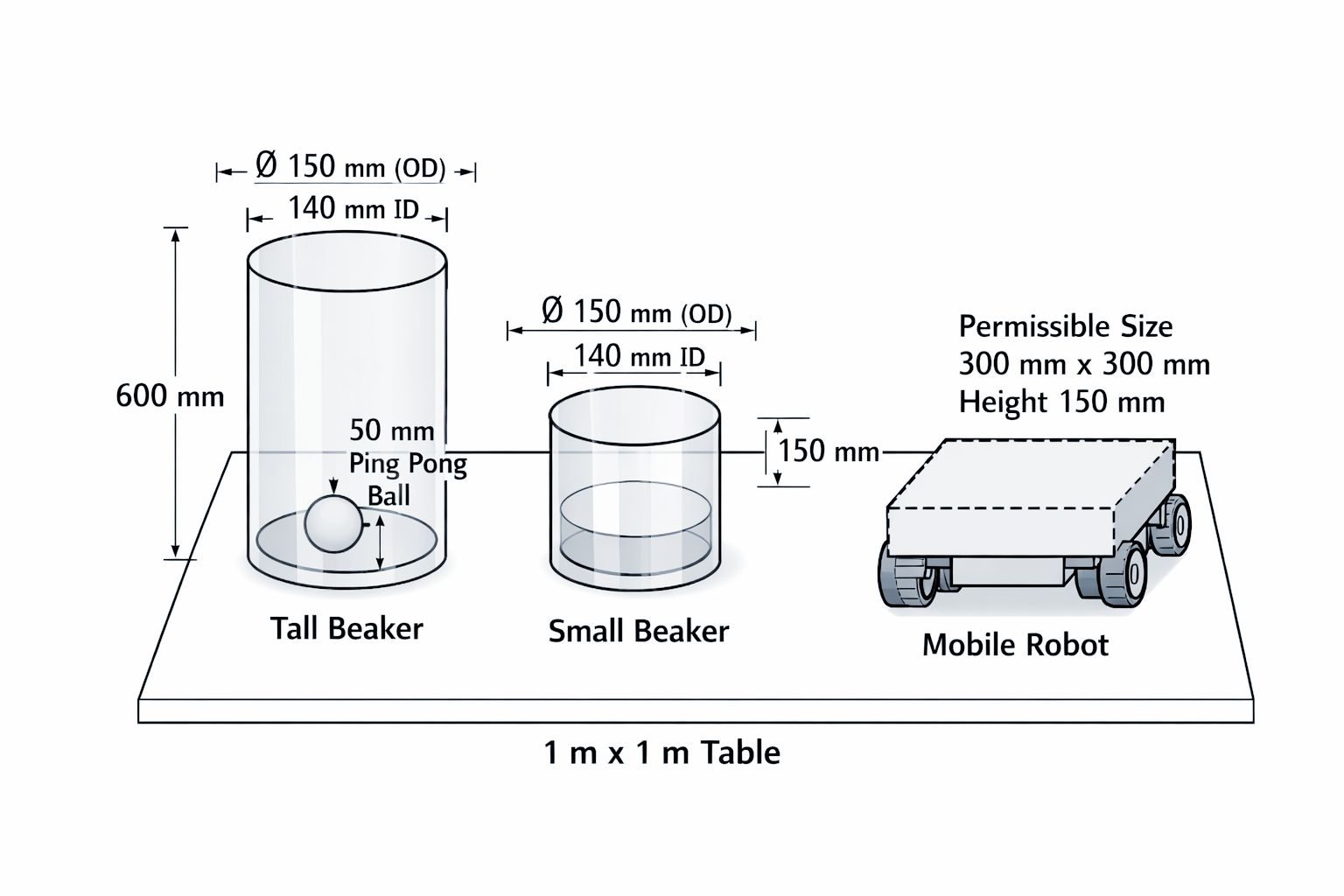
- Retrieve a 50 mm ball from a 140 mm ID, 600 mm tall beaker and transfer it to a 150 mm beaker
- 6-DOF arm with 750 mm vertical reach in a compact, constrained workspace
- Operated remotely from ~10 m with repeatable task execution
Designing for the worst case
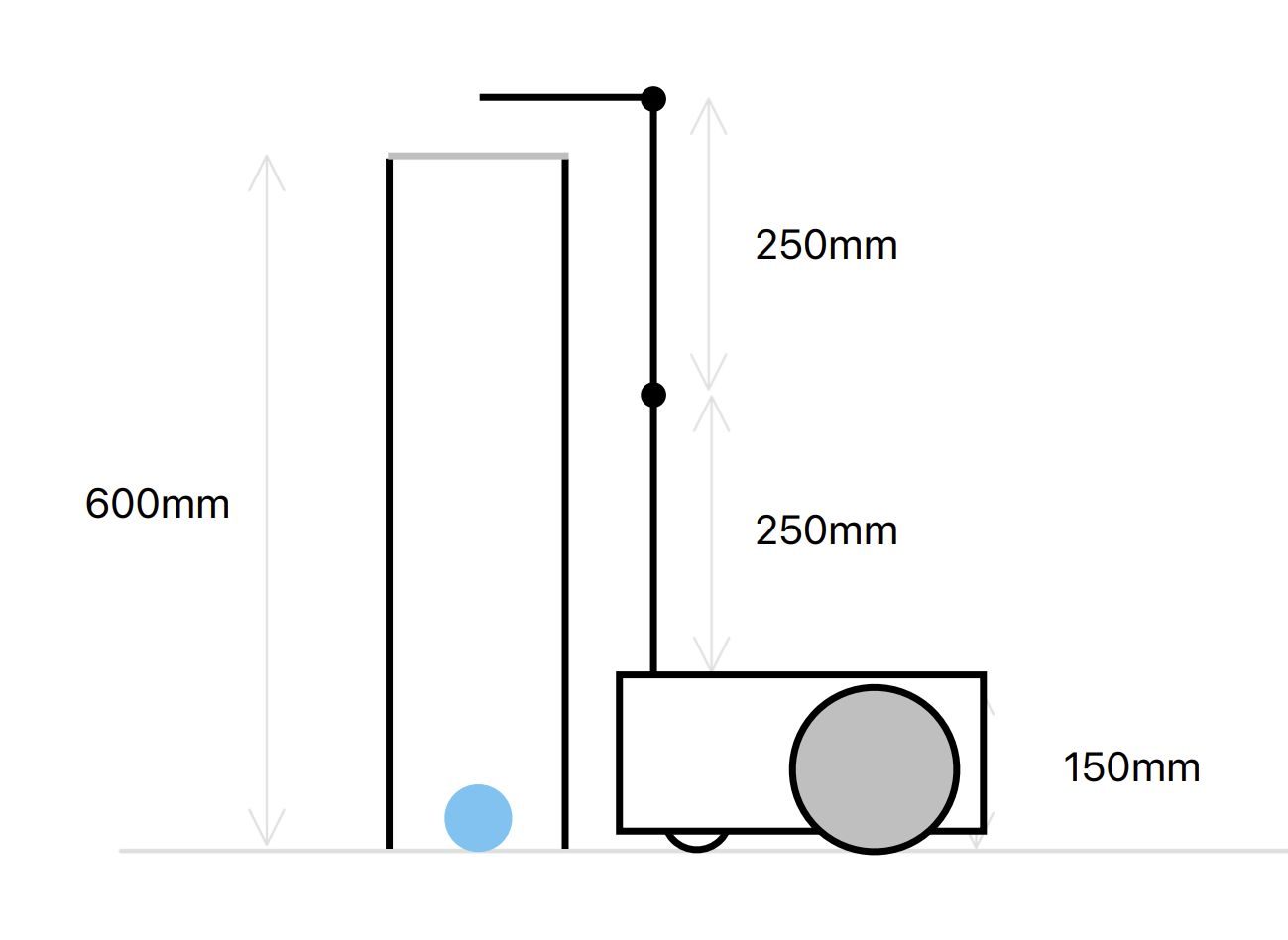
The first step was identifying the worst-case scenario so the robot would work reliably in every configuration: the tall beaker at the table corner, the ball at the furthest internal edge and maximum depth, and the second beaker immediately adjacent.
- Maximum horizontal reach and enough vertical reach to clear a 600 mm beaker
- High positional precision near fragile containers
- Controlled approach angles to avoid contact or toppling
End effector
The end effector was the most critical subsystem, since a remote operator can't make extremely precise adjustments. I evaluated jaw grippers, suction, and magnetic pickup. Suction needs good surface sealing and magnets don't work on a plastic ball.
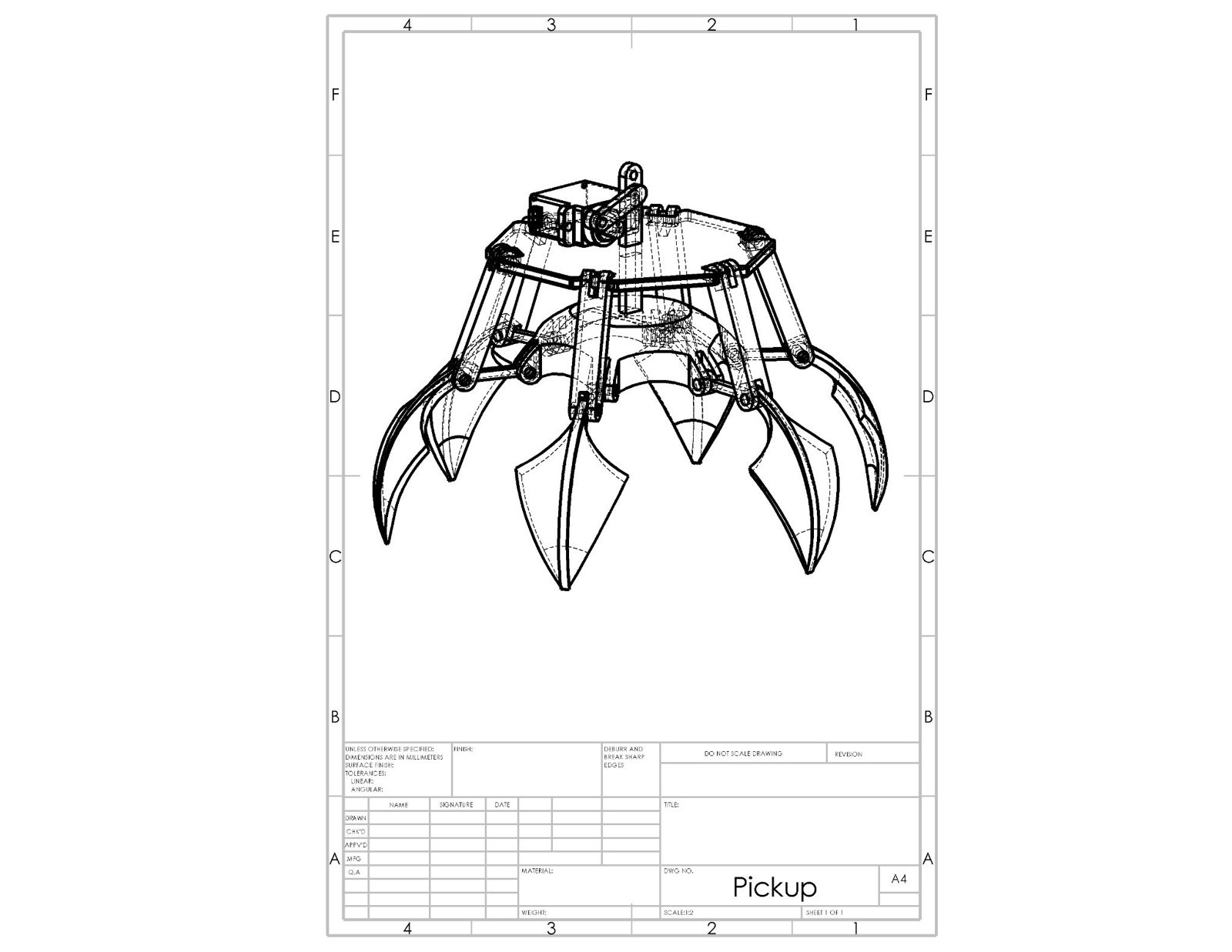
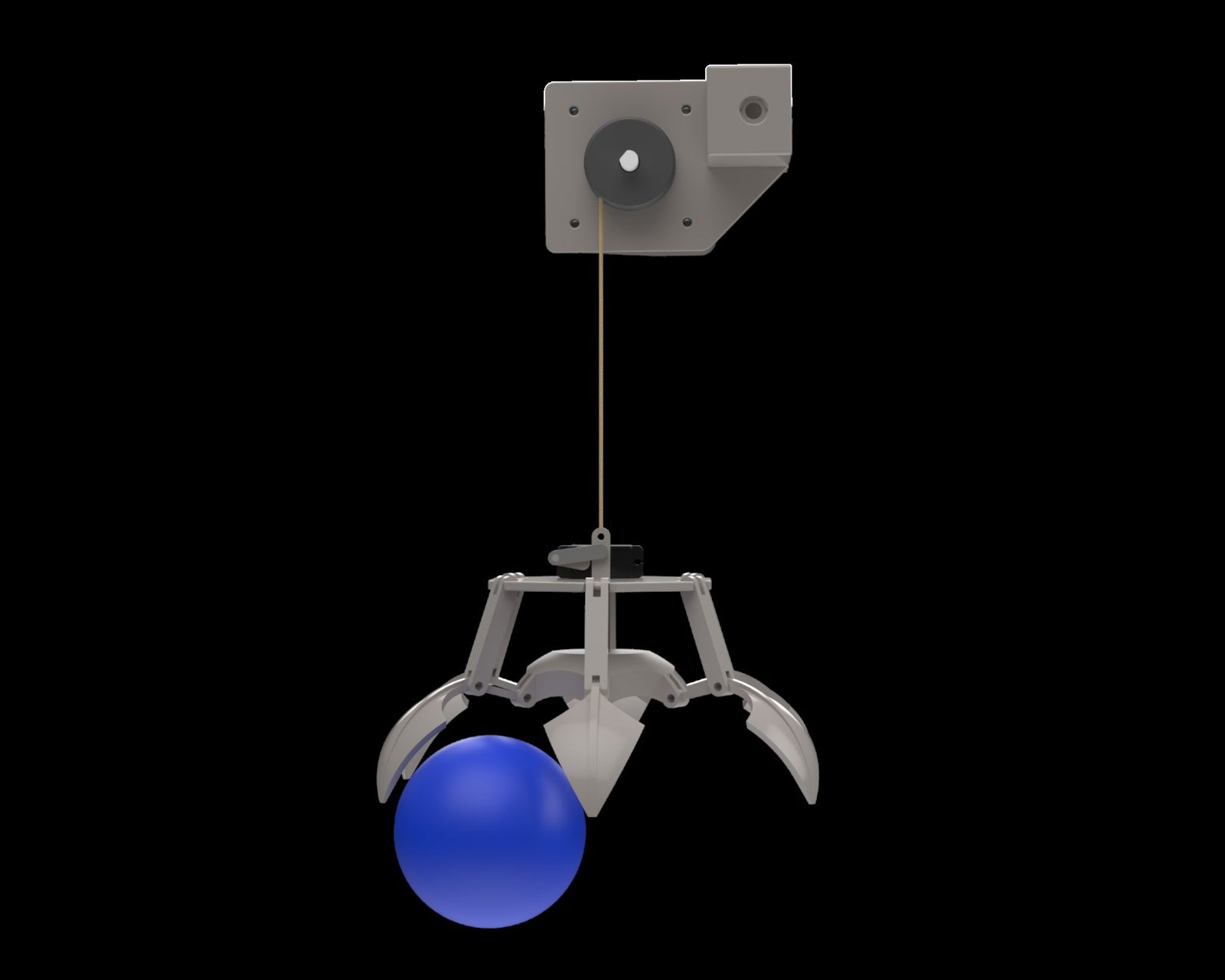
I designed a six-jaw claw inspired by arcade claw machines. It captures the ball from below rather than relying on precise pinching, and flange features on each jaw keep the gaps smaller than the ball when extended.
Passive compliance
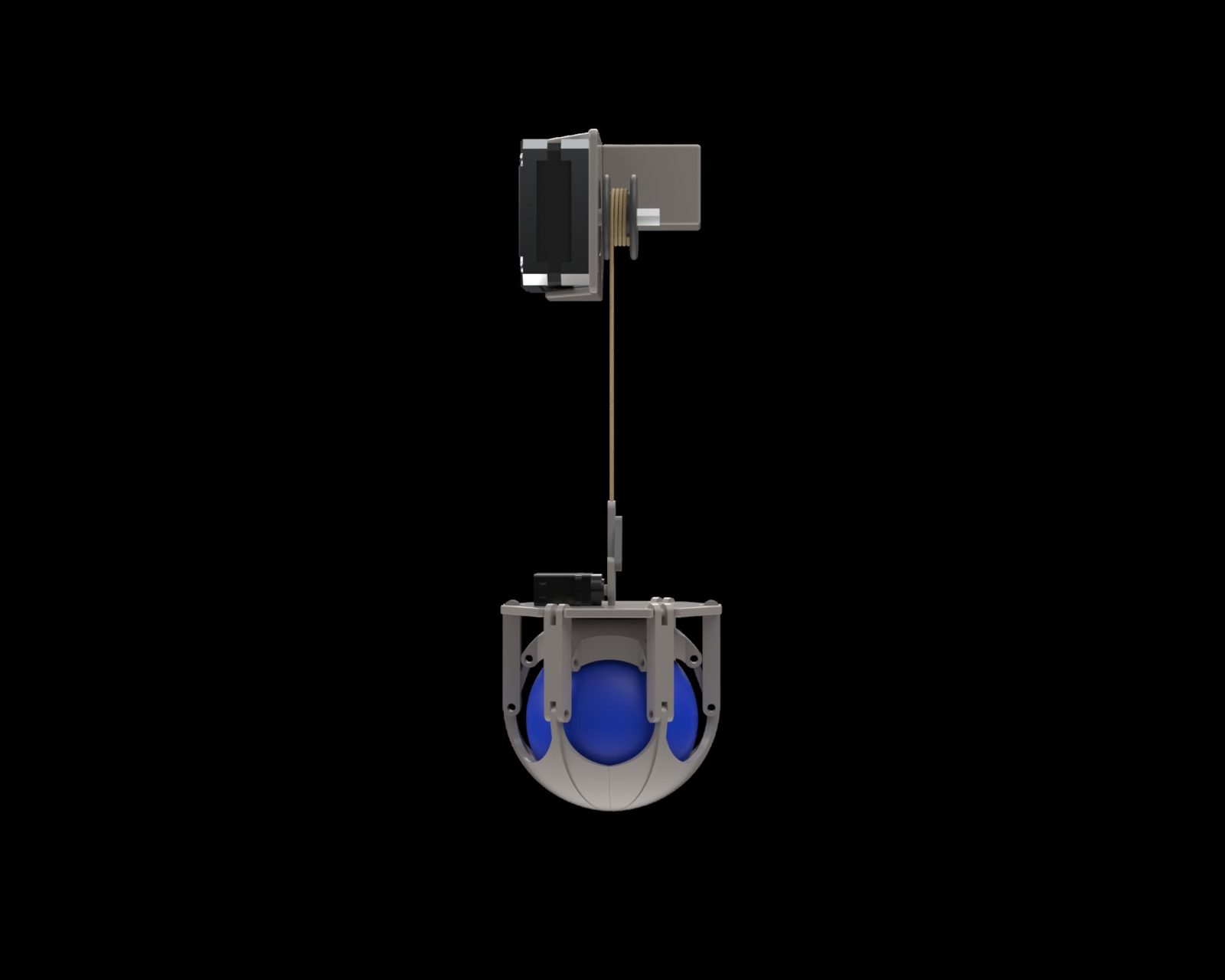
A thread-based lowering mechanism introduces passive compliance, letting the claw self-align with the beaker walls as it descends. This reduced the accuracy required from the operator and made the system far more robust in practice.
Manipulator architecture
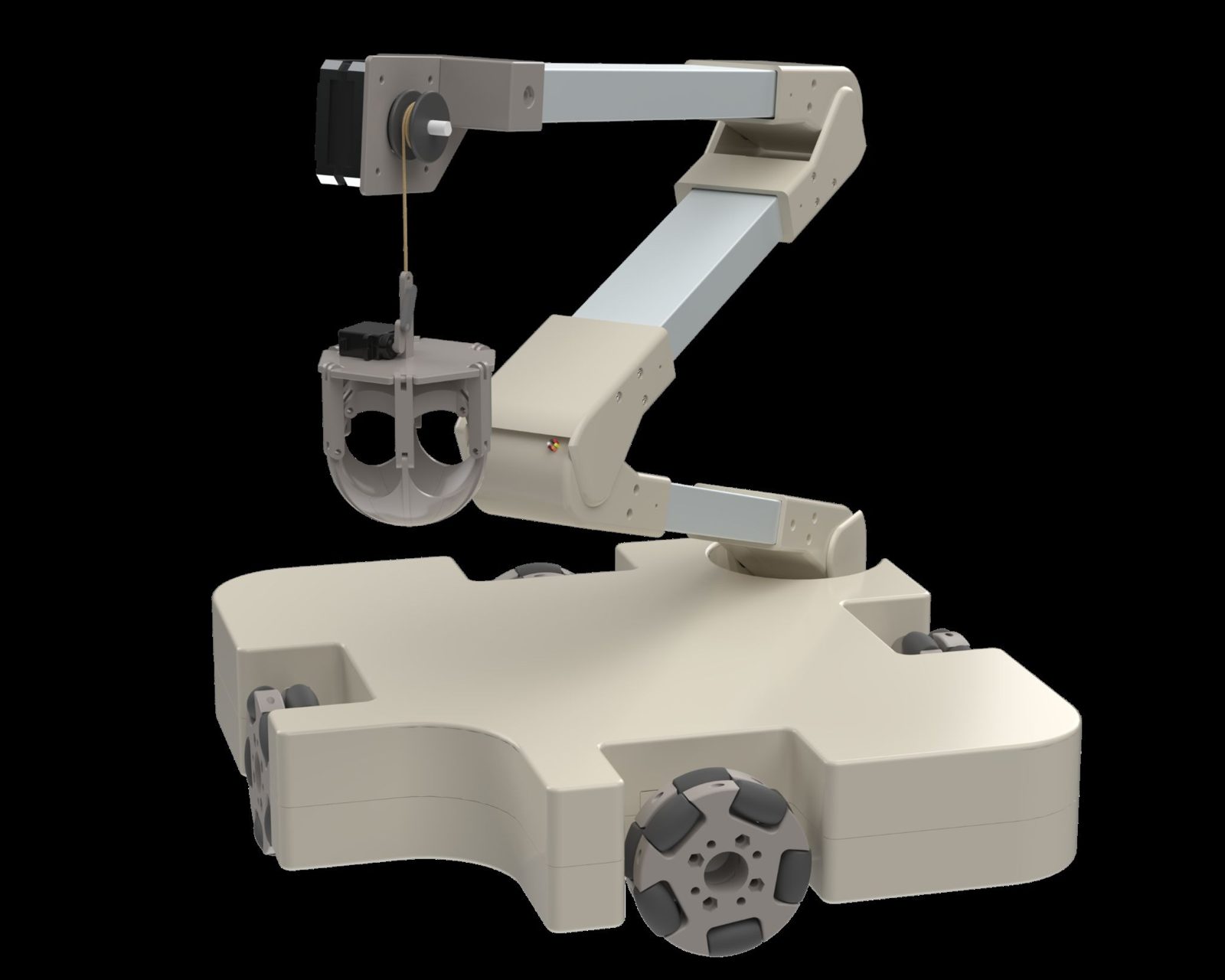
The 6-DOF arm is built on three main links that fold diagonally across the base, maximizing link length within the footprint while still achieving 750 mm of vertical reach.
- Servo-driven joints with up to 180° rotation
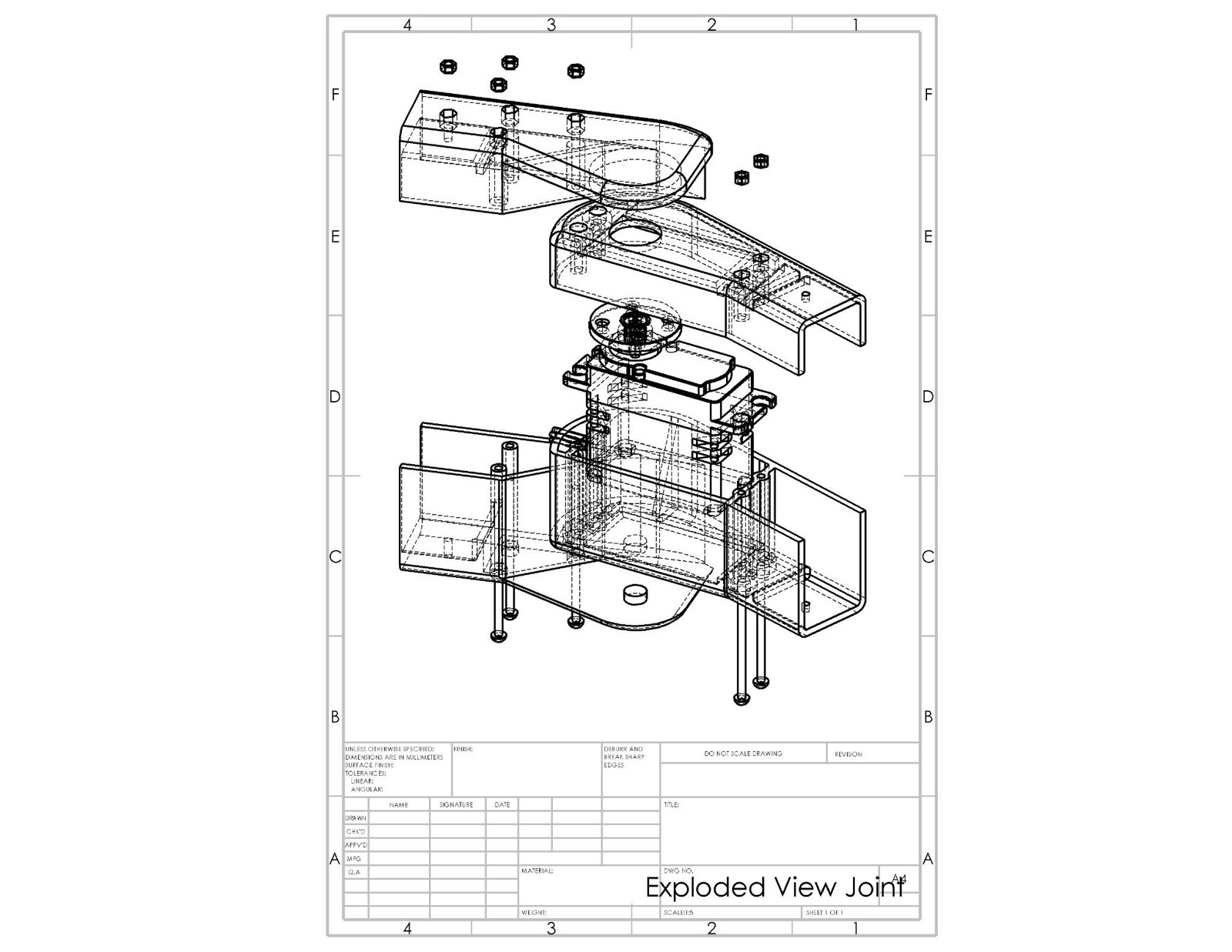
- Standardized joint module reused across the arm to reduce part count
- Injection-moldable servo joint housings designed with DFM principles for scalable manufacturing
Mobile platform
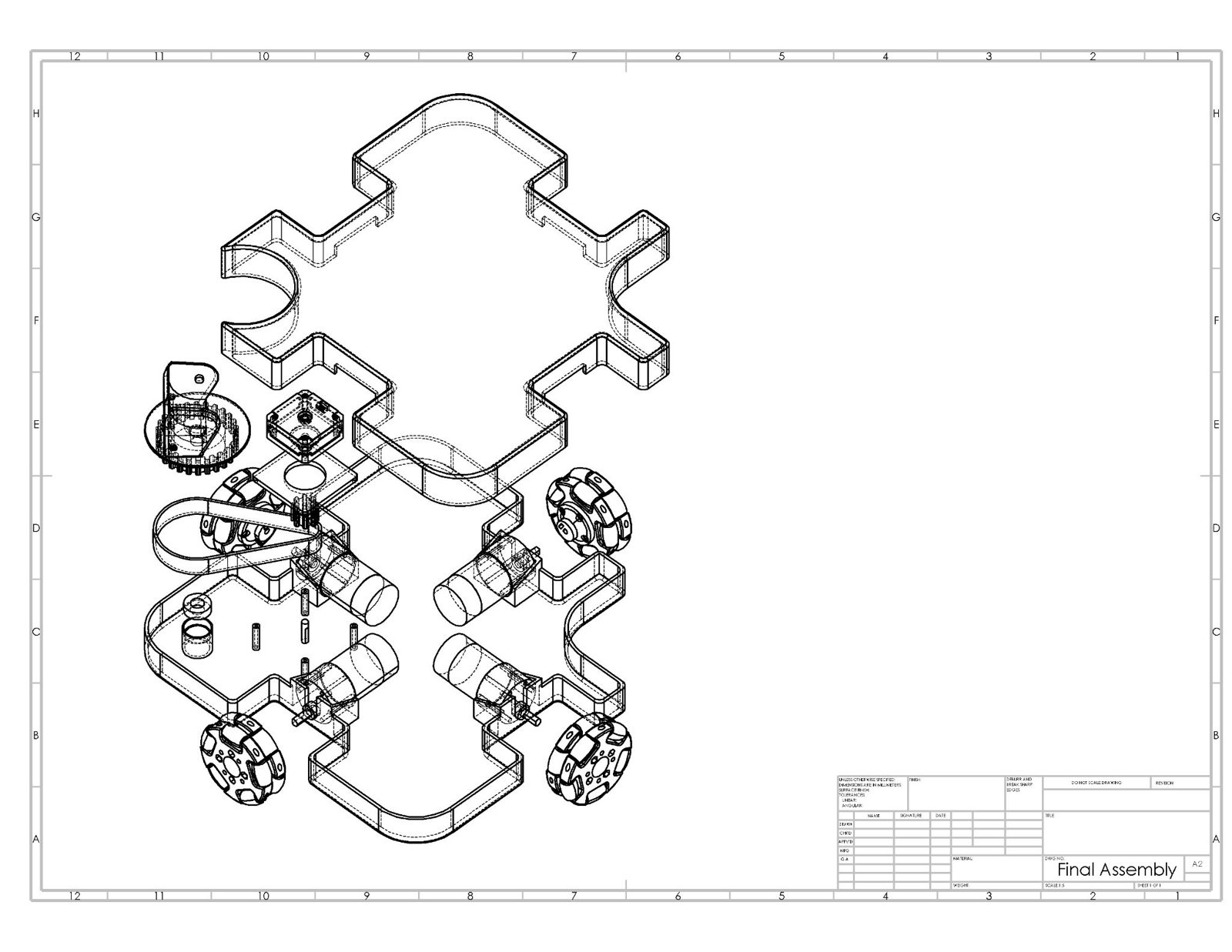
I compared differential, tracked, Mecanum, and omni-wheel drives, and selected a four omni-wheel platform for precise lateral and rotational movement. It can rotate 360° even when operating right next to the beakers.
Outcome
The final system fits a 300 × 300 × 150 mm footprint with a total mass of about 3.66 kg. It was developed entirely in SolidWorks, including mass estimation and assembly integration.