04
Quadcopter Modeling & Structural Optimization
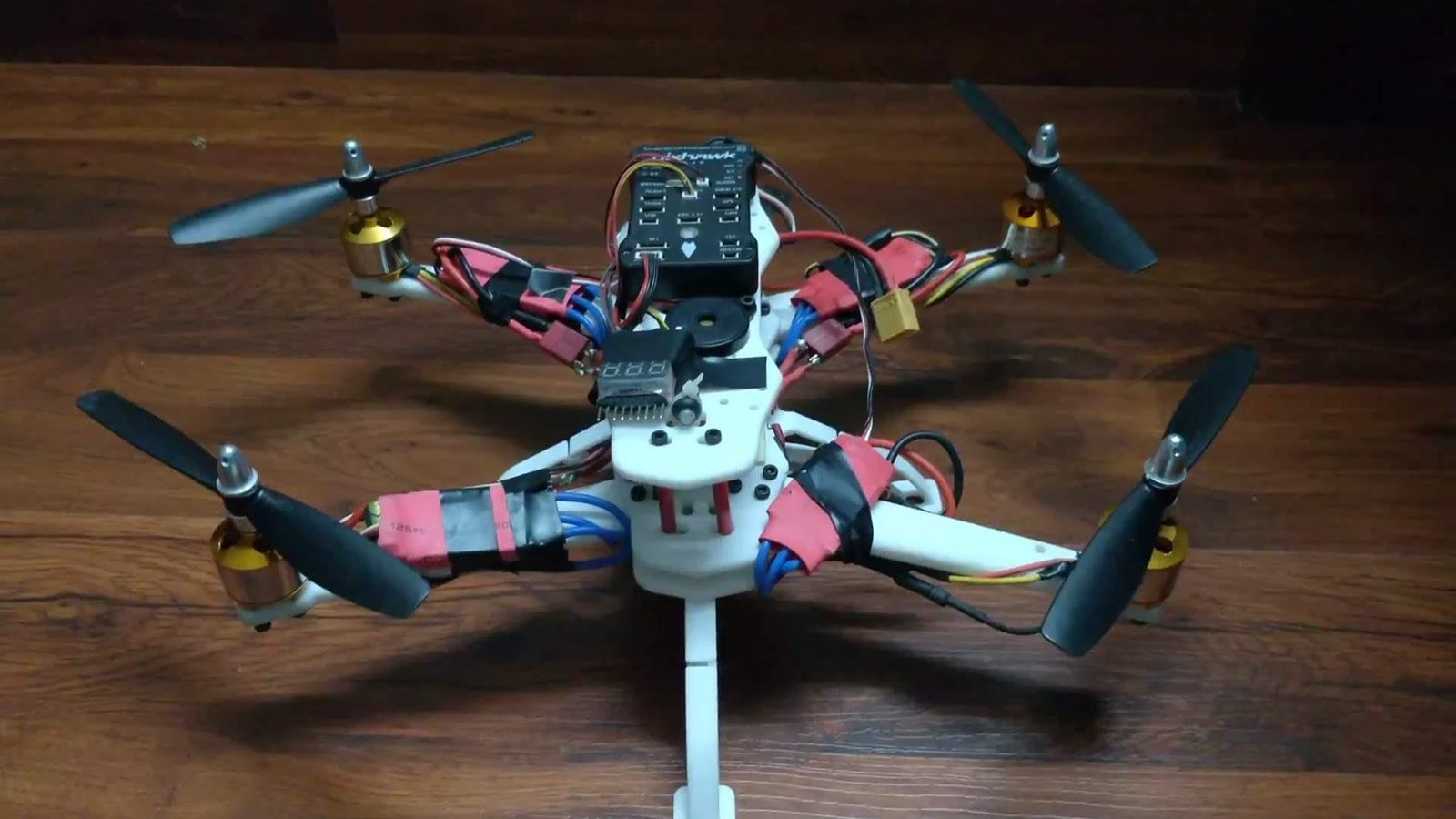
An unmanned aerial cargo quadcopter, modeled to study how payload and environment affect flight, with FEA-driven material selection and topology-optimized printed parts.
- Design Optimization
- Structural Analysis
- Additive Manufacturing
- Weight reduction
- ~25%
- Payload
- 350 g
- Arm length
- 170 mm
Overview
- System-level simulation of battery, propulsion, and vehicle dynamics
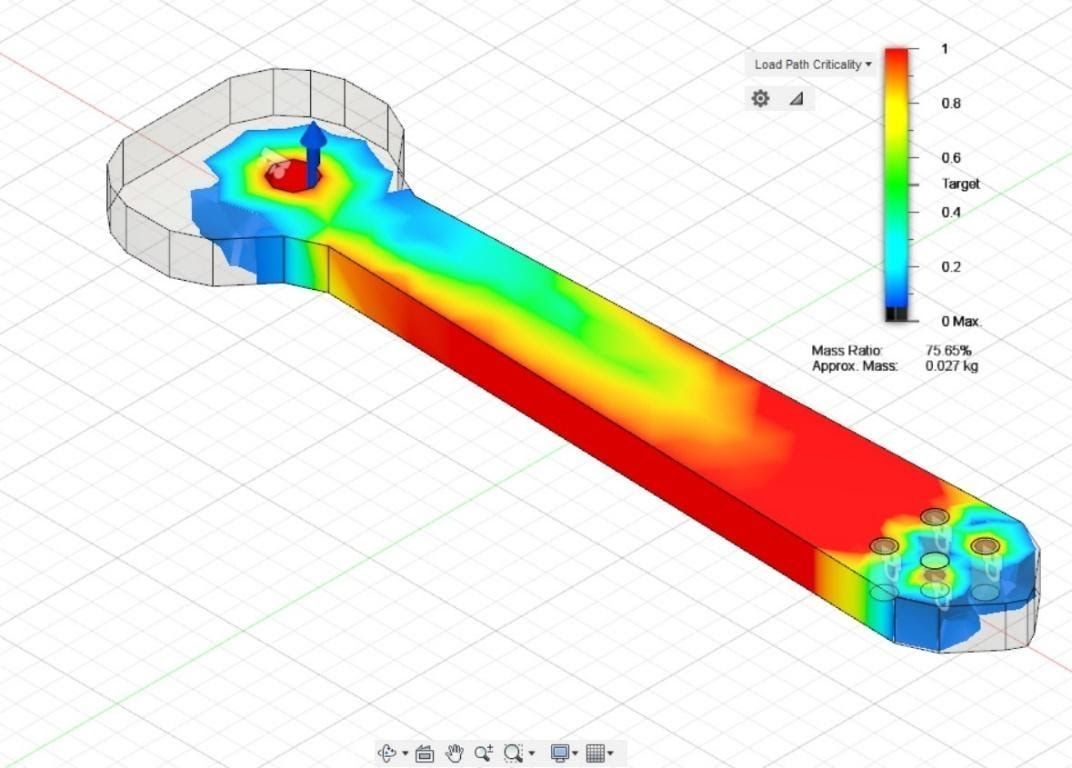
- ~25% weight reduction through topology optimization
- Stable flight with payloads up to 350 g
Structural and mechanical design
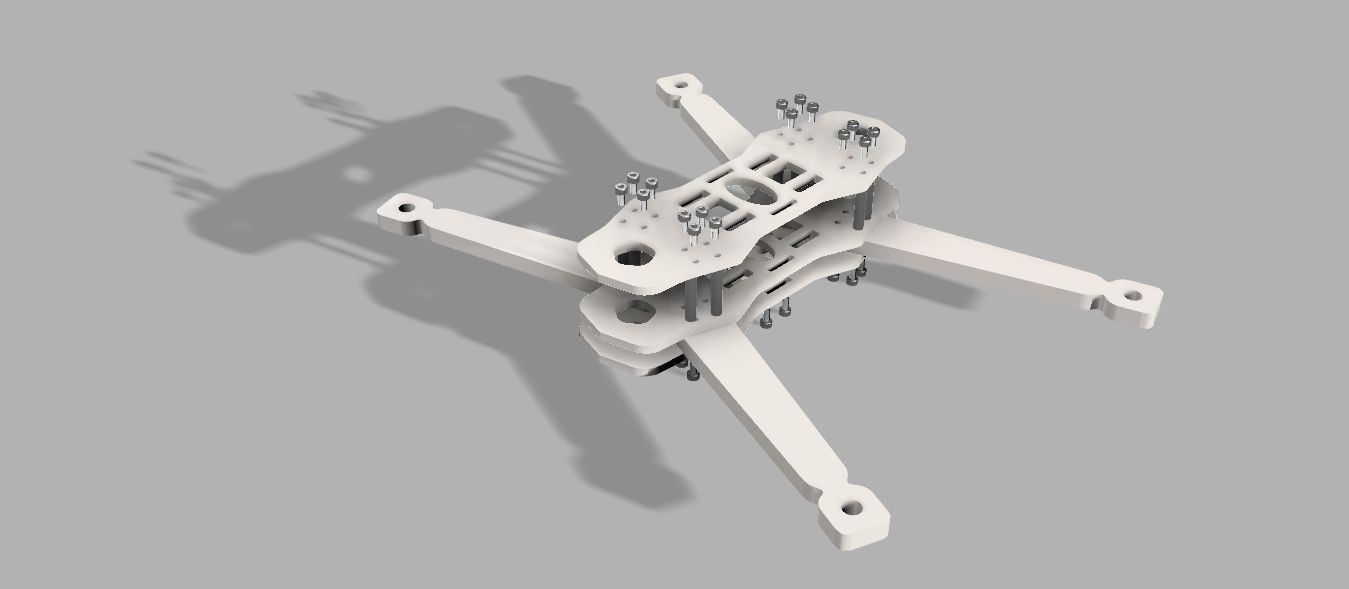
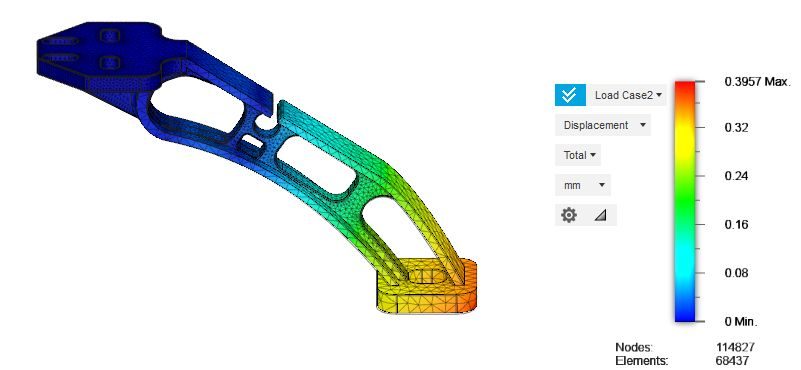
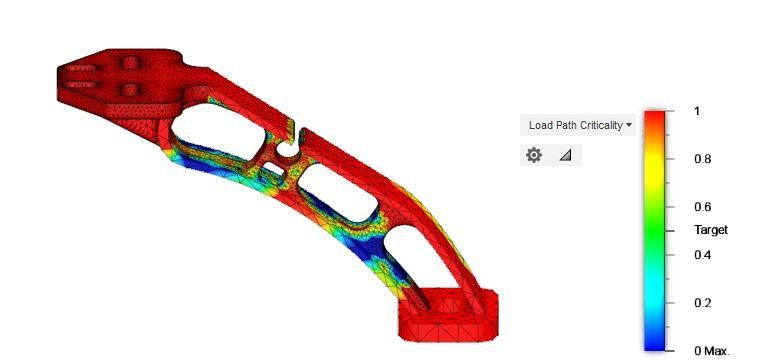
The 170 mm frame arms were evaluated in ABS, PLA, PC, and Nylon PA. FEA pointed to Nylon for low deformation, manufacturability, and impact resistance. Topology optimization then removed low-stress regions from the arms and legs.
Cargo handling and control
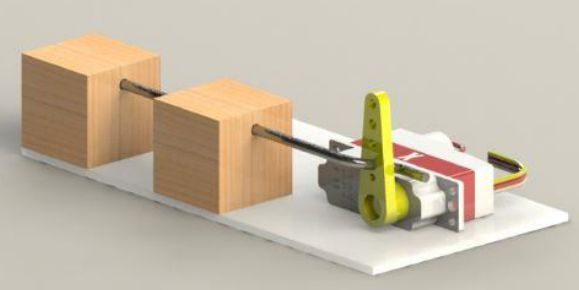
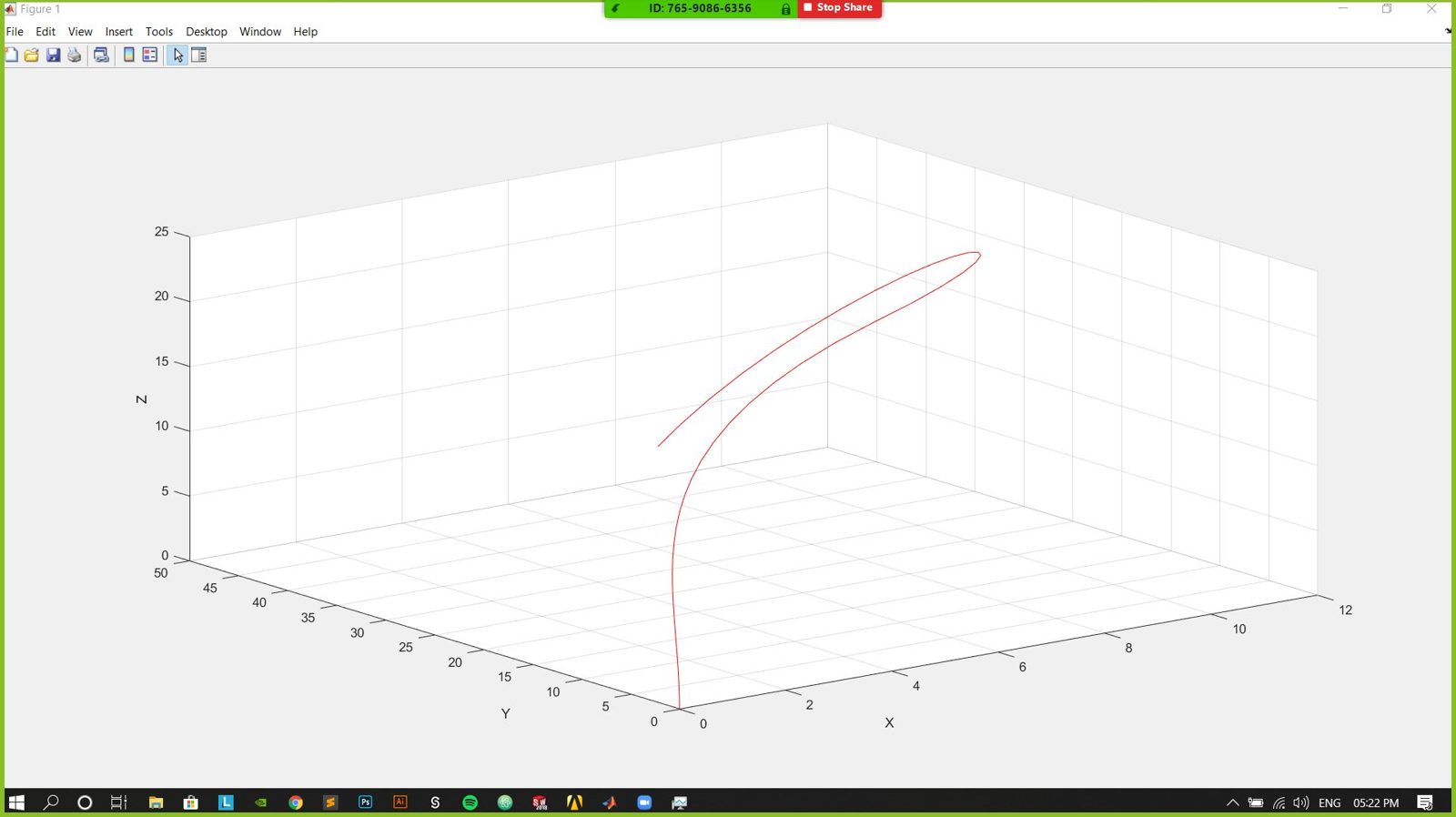
A servo-actuated pickup-drop mechanism releases payloads with low power draw. An integrated PID simulation analyzed motion under varying payloads, 5 m/s wind disturbance, and multi-axis rotation rates.
Validation and manufacturing
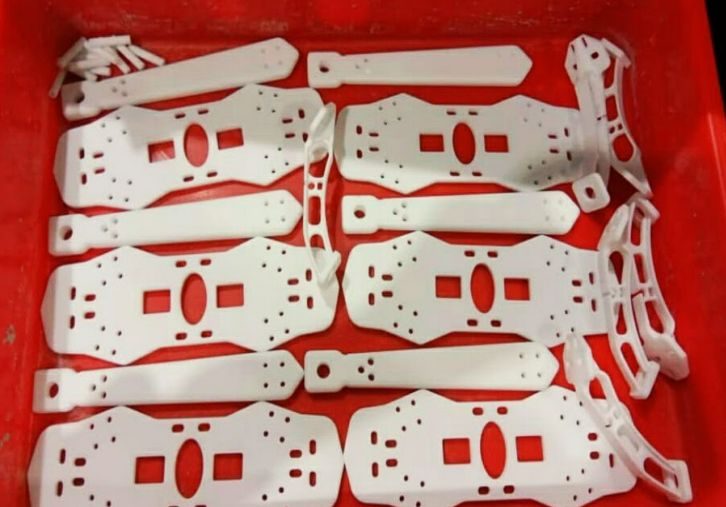
Structural parts were printed in FDM Nylon with 80% honeycomb infill. The vehicle demonstrated stable flight with up to 350 g of payload.